Ethiopia’s upcoming general election is more than a contest for parliamentary seats. It is a test of whether Africa’s second-most populous country can hold a credible national vote while major regions remain affected by war, armed insurgency, political mistrust and deep ethnic grievances.
The election, scheduled for June 1, 2026, is expected to return Prime Minister Abiy Ahmed’s Prosperity Party to power. But the central question is not only who wins. The bigger question is whether the vote can reduce Ethiopia’s political crisis—or deepen it.
Latest Election Developments
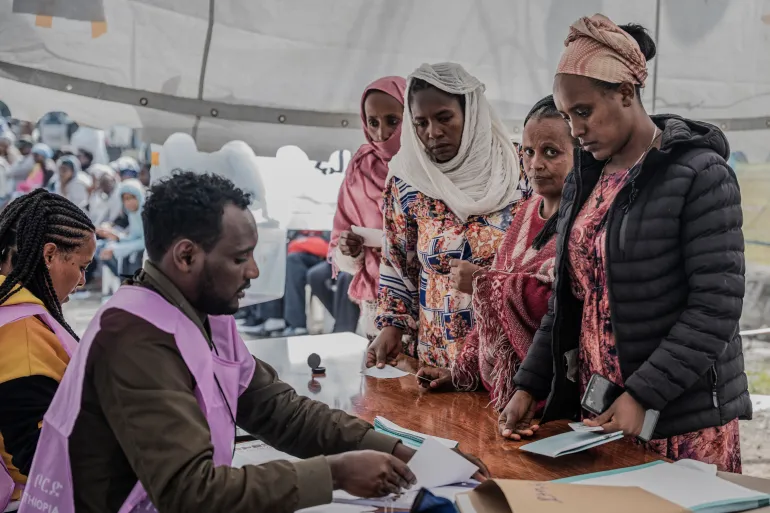
The National Election Board of Ethiopia says preparations are in place for the country’s seventh general election. More than 50 million Ethiopians are registered to vote, and dozens of parties and thousands of candidates are competing for seats in parliament and regional councils.
The government presents the election as proof that Ethiopia’s political transition is continuing despite conflict. Officials argue that voting must proceed to preserve constitutional order and strengthen public institutions.
But the electoral environment is uneven. Elections will not take place in Tigray, and parts of Amhara are also excluded because of insecurity. This means millions of citizens will either not vote or will participate under difficult conditions. For opposition groups, civil society actors and some analysts, this raises a major legitimacy problem: can an election be considered fully national when some of the country’s most politically sensitive regions are partly or completely outside the process?
The African Union has deployed an observer mission led by former Kenyan President Uhuru Kenyatta. Its presence gives the process regional importance, but observers alone cannot solve Ethiopia’s deeper political tensions.
Main Political Tensions
Prime Minister Abiy Ahmed and the Prosperity Party enter the election from a position of institutional strength. The ruling party controls the state, dominates parliament and has built a strong national campaign message around development, reform and stability.
The opposition, by contrast, remains fragmented and weakened. Some parties accuse the government of restricting political space, arresting critics, limiting media freedom and using administrative pressure against opponents. These claims are politically sensitive and sometimes disputed by the government, but they have shaped public debate ahead of the vote.
The deeper issue is trust. Ethiopia’s political system has long struggled to convince all major groups that elections are a fair path to power. For many opposition supporters, the election looks less like an open contest and more like a process designed to confirm the ruling party’s dominance. For government supporters, the vote is necessary to prevent instability and keep the state functioning.
This divide means the post-election period may be as important as election day itself. If the Prosperity Party wins by a large margin, as widely expected, the opposition may question the credibility of the result. If turnout is low in insecure areas, the government may face renewed questions about representation.
Ethnic and Regional Conflict Factors
The most serious election risks are linked to Ethiopia’s regional conflicts.
In Amhara, fighting between federal forces and Fano-linked militias remains one of the country’s biggest security challenges. The conflict has damaged local administration, displaced civilians and made normal campaigning difficult in several areas. Amhara politics is now shaped by anger over security, federal authority and territorial disputes connected to the aftermath of the Tigray war.
In Oromia, insecurity linked to the Oromo Liberation Army continues to affect rural areas. The government describes the OLA as a security threat, while Oromo opposition voices often accuse the state of heavy-handed measures and political exclusion. This creates a tense environment where voters may fear both armed groups and state security forces.
Tigray remains the most politically explosive case. Although the 2022 Pretoria peace agreement ended the full-scale war, the region’s political settlement remains incomplete. Tigray’s exclusion from the election leaves it without normal federal representation and keeps the region in a fragile post-war limbo. Internal Tigrayan divisions, disputes over the interim administration and unresolved territorial questions all increase the risk of renewed confrontation.
Somali, Afar and other regions are less central to the national election crisis but remain important. Border disputes, resource competition, drought pressures and local political rivalries could still affect turnout and public confidence in the state.
Key Risks
The first risk is electoral legitimacy. If large parts of the population cannot vote freely, the result may be legally valid but politically contested.
The second risk is violence before or after the vote. Armed groups may use the election period to challenge the government, while security forces may respond with heavy operations that deepen local grievances.
The third risk is opposition rejection. If opposition parties believe the process is unfair, they may boycott institutions, mobilize supporters or refuse to recognize the outcome.
The fourth risk is regional spillover. Ethiopia is central to the Horn of Africa. Instability inside Ethiopia affects Somalia, Eritrea, Sudan, Djibouti and the Red Sea corridor. Renewed conflict in Tigray or rising tension with Eritrea would have consequences far beyond Ethiopia’s borders.
Possible Scenarios
The most likely scenario is a controlled election with a strong Prosperity Party victory. In this case, the government claims a renewed mandate, but unresolved conflicts continue.
A second scenario is a low-legitimacy election. Voting occurs, but opposition criticism, regional exclusions and security problems weaken public trust. This would leave Ethiopia with a government that is legally elected but politically contested.
A third, more dangerous scenario is post-election escalation. If armed groups, regional actors or opposition movements see the result as illegitimate, Ethiopia could face renewed unrest in Amhara, Oromia or Tigray.
The best-case scenario is that the vote is followed by dialogue, limited reforms and renewed efforts to settle regional conflicts. But this would require political compromise, not just electoral victory.
Conclusion
Ethiopia’s 2026 election matters because it comes at a moment when the country is still struggling to recover from war, rebuild trust and manage ethnic federal tensions. The vote may give the Prosperity Party another mandate, but it will not automatically solve the deeper crisis.
For Ethiopia, the real test begins after the ballots are counted. If the government uses victory to open dialogue and address regional grievances, the election could help stabilize the country. If it treats victory as a blank cheque, the vote may become another stage in Ethiopia’s long-running struggle between central authority, ethnic politics and armed resistance.
For the Horn of Africa, Ethiopia’s stability is not a domestic issue alone. A peaceful election could strengthen regional confidence. A contested one could deepen insecurity across one of the world’s most fragile strategic regions.