From the Taiwan Strait to the Arctic, the world’s most consequential geopolitical competition is no longer about occupying land—it is about securing the narrow sea lanes that keep globalization alive.
For much of modern history, great powers measured strength by the territory they controlled. Today, they increasingly measure it by something far less visible: the maritime routes through which the global economy flows.
The world’s most powerful governments may appear preoccupied with different crises—Chinese military exercises around Taiwan, Iranian threats to the Strait of Hormuz, attacks on shipping in the Red Sea, growing competition in the Arctic, or renewed naval cooperation across the Indo-Pacific. Yet these developments are not isolated flashpoints. They are chapters in a single geopolitical story.
The map attracting the attention of Washington, Beijing, Moscow, Brussels, Tokyo, New Delhi, and Tehran is no longer defined by borders on land. It is defined by narrow waterways where a handful of ships—or a single military confrontation—can reshape global markets overnight.
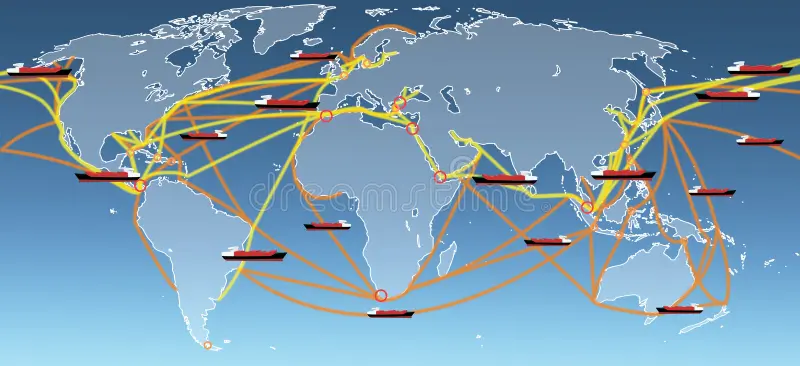
This is because globalization depends on geography far more than many assume. Around 80 percent of world trade by volume moves by sea, while energy supplies, manufactured goods, semiconductors, food exports, and industrial raw materials all travel through a surprisingly small number of maritime chokepoints. These sea lanes have become the arteries of the international economy. Whoever can protect—or threaten—them gains influence that extends far beyond naval power.
That strategic logic explains why the Taiwan Strait has become one of the world’s most closely watched waterways. For Beijing, Taiwan represents sovereignty and national reunification. But the surrounding waters carry another layer of importance. The strait sits along shipping routes linking Northeast Asia with global markets and lies close to the world’s most advanced semiconductor supply chains. Any disruption would affect electronics production, artificial intelligence, automobiles, telecommunications, and countless industries dependent on advanced chips. For the United States, Japan, and their allies, preserving freedom of navigation there is therefore not simply about defending Taiwan. It is about preserving the stability of the economic system itself.
The same strategic calculation appears thousands of kilometers away in the Strait of Hormuz. Here, geography compresses a significant share of the world’s seaborne oil and liquefied natural gas exports into a narrow maritime corridor. Iran has long viewed its position as strategic leverage against rivals and sanctions. The United States and European navies, meanwhile, regard uninterrupted passage through Hormuz as essential to global energy security. Even countries with little direct involvement in Gulf politics closely monitor every incident because energy prices do not recognize political borders. A localized military confrontation can rapidly translate into inflation, higher transport costs, and slower economic growth across continents.
The Bab el-Mandeb tells a similar story from another angle. Recent attacks on commercial shipping forced vessels to abandon the Suez Canal route and instead sail around southern Africa, adding weeks to journeys and significantly increasing freight costs. The immediate consequence was felt not only in the Middle East but also in Europe, Asia, and Africa through delayed deliveries, disrupted supply chains, and rising insurance premiums. A narrow passage at the entrance to the Red Sea demonstrated how quickly regional insecurity can become a global economic problem.
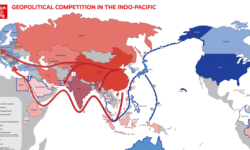
Farther east, the Strait of Malacca has become another focal point because it connects the Indian Ocean with the Pacific, carrying much of East Asia’s energy imports and manufactured exports. China has long described its dependence on this corridor as a strategic vulnerability, often referred to as the “Malacca Dilemma.” This concern has encouraged Beijing to diversify transport routes through pipelines, railways, port investments, and expanded naval capabilities. India, situated near the western approaches to Malacca, sees the same geography as a strategic advantage. The United States, Australia, Japan, and several Southeast Asian states likewise view the corridor as indispensable to maintaining an open Indo-Pacific.
Even the Arctic—once considered geopolitically peripheral—is entering this same strategic equation. Melting sea ice is gradually opening shorter shipping routes between Europe and Asia while exposing valuable natural resources and military operating areas. Russia has expanded its Arctic military infrastructure, NATO has intensified northern defense planning, and European governments increasingly see the High North as a future strategic theater rather than a frozen frontier. Discussions surrounding the Greenland-Iceland-United Kingdom (GIUK) Gap—sometimes broadly associated with northern maritime bottlenecks or “Bear Gap” concepts in strategic commentary—reflect renewed attention to controlling naval access between the Arctic and the Atlantic. Geography that was once constrained by climate is becoming geopolitically active.
Viewed separately, these developments seem disconnected. Viewed together, they reveal a profound shift in how power is exercised.
The competition is no longer centered on conquering territory in the traditional sense. Instead, major powers seek to ensure that commerce continues to flow on terms favorable to their own security and economic interests. Naval forces have consequently assumed a role extending well beyond warfare. Modern fleets escort commercial vessels, protect undersea communication cables, secure energy infrastructure, monitor strategic passages, and provide deterrence without requiring permanent occupation of foreign territory.
This explains why countries are investing simultaneously in aircraft carriers, submarines, anti-ship missiles, unmanned maritime systems, and overseas naval facilities. The objective is not necessarily to fight large-scale naval wars but to shape the conditions under which global trade operates. Influence increasingly depends upon the ability to guarantee—or deny—safe passage.
The consequences extend beyond military strategy. A crisis in one chokepoint can reverberate through supply chains worldwide. Delayed container shipments affect manufacturing. Disrupted energy exports raise electricity and transport costs. Interrupted grain deliveries increase food prices in vulnerable countries. Semiconductor shortages slow industrial production. Financial markets react long before governments do, demonstrating that maritime security has become inseparable from economic stability.
For countries in the Horn of Africa, these developments are far from distant geopolitical theater. The region sits adjacent to one of the world’s most important maritime crossroads, where the Red Sea meets the Gulf of Aden and connects to the Indian Ocean. Ports, logistics hubs, naval facilities, and maritime infrastructure across the region are attracting unprecedented international interest precisely because they overlook these vital shipping routes.
Events in the Taiwan Strait, Hormuz, Malacca, or the Arctic can therefore influence investment decisions, shipping patterns, insurance costs, energy prices, and trade opportunities in the Horn of Africa. Geography increasingly links regions that appear politically unrelated. What happens in East Asia can affect port revenues in the Red Sea; disruptions in the Persian Gulf can influence fuel prices across Africa; competition in the Arctic may alter future shipping patterns connecting Europe and Asia.
This growing interdependence explains why the same map now sits on the desks of policymakers from Beijing to Brussels, from Washington to Moscow. It is a map not of borders, but of maritime arteries whose uninterrupted operation underpins the modern global economy.
The defining geopolitical question of the twenty-first century may therefore not be who controls the largest territory, but who ensures—or interrupts—the movement of goods, energy, technology, and information across the world’s oceans.
Has the world’s geopolitical battlefield quietly shifted from land to the sea? Increasingly, the evidence suggests that it has. Land still matters, and territorial disputes remain dangerous. But the decisive contests of our era are increasingly unfolding along narrow stretches of water where military strategy, global commerce, technological competition, and political influence converge. The nations that secure these sea lanes will shape not only regional security but also the future architecture of the international order itself.