From defense spending and industrial policy to energy security and critical minerals, governments are reshaping their national strategies—not because they expect one war, but because they believe instability has become a permanent feature of global politics.
For decades after the Cold War, much of the world operated under a powerful assumption: globalization would make conflict less likely, economic interdependence would encourage cooperation, and prosperity would become the foundation of international stability. Governments optimized for efficiency, companies stretched supply chains across continents, and defense budgets shrank as policymakers embraced the promise of a more peaceful world.
That assumption is now being quietly dismantled.
Across capitals from Washington and Brussels to Tokyo, Canberra, New Delhi, and beyond, governments are rewriting their strategic calculations. The goal is no longer simply to deter a single adversary or prepare for one possible conflict. Instead, they are preparing for a world where military confrontation, economic coercion, cyberattacks, supply-chain disruptions, and geopolitical competition may occur simultaneously—and persist for years rather than months.
This transformation explains why countries are increasing defense spending at levels not seen in decades, strengthening old alliances, investing billions in domestic industries, and redefining national security to include everything from semiconductor production to food supplies.
The world is no longer preparing for the next crisis. It is preparing to live with continuous uncertainty.
The most visible evidence of this shift is the remarkable revival of defense planning. For years, many European governments reduced military expenditures under the belief that large-scale interstate war had become increasingly unlikely. That confidence evaporated with Russia’s invasion of Ukraine. What began as a regional conflict rapidly evolved into a broader strategic shock, demonstrating that conventional warfare between states had not disappeared from Europe but had merely been underestimated.
The response has extended far beyond Ukraine itself. NATO members have accelerated military modernization, expanded troop readiness, strengthened eastern defenses, and committed to significantly higher defense spending. New members have joined the alliance, while existing members are investing in missile defense, long-range precision weapons, logistics, and ammunition production.
Yet NATO’s expansion is not merely a reaction to Russia. It reflects a deeper conclusion: future threats may emerge faster, last longer, and involve multiple domains simultaneously. Preparedness has replaced optimism as the guiding principle.
The same logic is reshaping economic policy.
For decades, governments prioritized efficiency above resilience. Companies sourced components wherever production was cheapest, while policymakers assumed that global markets would continue functioning regardless of political disagreements.
That assumption has also broken down.
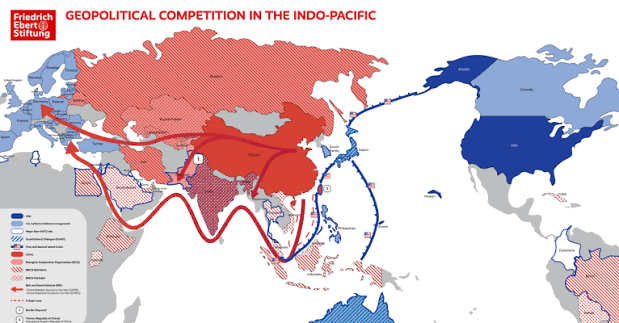
The pandemic exposed vulnerabilities in medical and industrial supply chains. The Ukraine war disrupted grain exports and energy markets. Attacks on commercial shipping in the Red Sea forced vessels to reroute around southern Africa, increasing costs and delivery times. Rising tensions in the Taiwan Strait have intensified concerns about disruptions to one of the world’s most important technology supply hubs.
Individually, each event appears manageable. Collectively, they reveal a common vulnerability: modern economies depend on highly interconnected systems that can be disrupted by conflicts occurring thousands of kilometers away.
As a result, resilience has become as valuable as efficiency.
Governments are encouraging domestic manufacturing, diversifying suppliers, creating strategic reserves, subsidizing key industries, and strengthening infrastructure once considered purely commercial. The objective is no longer simply economic growth; it is ensuring that national economies can continue functioning during prolonged geopolitical disruption.
This is why industrial policy has returned to the center of international politics after decades of relative neglect.
Security itself is also undergoing a profound redefinition.
Traditionally, national security focused primarily on military capabilities: armies, navies, and air forces. Today, governments increasingly view technological leadership, semiconductor manufacturing, artificial intelligence, energy independence, rare-earth processing, telecommunications infrastructure, and even agricultural resilience as strategic assets.
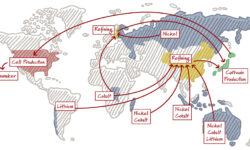
Control over critical minerals such as lithium, cobalt, graphite, and rare earth elements has become intertwined with national security because these resources underpin electric vehicles, renewable energy systems, advanced weapons, satellites, and AI-powered technologies.
Similarly, semiconductor production has become a geopolitical concern because modern economies—and modern militaries—depend upon advanced microchips. A disruption to chip manufacturing could affect everything from smartphones and hospitals to fighter aircraft and missile guidance systems.
National power is therefore no longer measured solely by the number of soldiers a country can deploy. Increasingly, it depends on whether that country can manufacture advanced technologies, secure reliable energy, protect digital infrastructure, and maintain industrial capacity during prolonged crises.
Cybersecurity reflects this broader evolution.
Modern conflict rarely begins with tanks crossing borders. It may begin with cyberattacks against financial institutions, disinformation campaigns targeting elections, sabotage of undersea cables, ransomware attacks on hospitals, or interference with energy grids.
These forms of hybrid warfare blur the distinction between peace and conflict. Countries may find themselves under sustained pressure without ever formally declaring war.
Consequently, governments are investing heavily in cyber defense, intelligence sharing, digital infrastructure protection, and public-private partnerships designed to secure critical systems.
The battlefield has expanded into cyberspace, financial markets, communication networks, and information ecosystems.
International diplomacy is evolving alongside these security transformations.
Recent G7 summits increasingly devote attention not only to traditional geopolitical disputes but also to energy security, resilient supply chains, technology partnerships, sanctions coordination, and protection against economic coercion.
This broader agenda illustrates how economic policy and foreign policy have become inseparable.
Trade agreements now carry strategic implications. Infrastructure investments influence geopolitical influence. Energy partnerships strengthen diplomatic relationships. Technology cooperation shapes future military capabilities.
Foreign policy has become less about managing isolated disputes and more about reducing systemic vulnerabilities.
Even countries geographically distant from active battlefields recognize that distance no longer guarantees safety.
A conflict in Eastern Europe can raise food prices in Africa. Instability in the Red Sea can disrupt factories in Europe and Asia. Cyberattacks launched from one continent can cripple hospitals on another. Escalation around Taiwan could disrupt global electronics production within days.
Globalization has transformed regional crises into worldwide economic and strategic shocks.
This explains why governments far removed from current conflicts are strengthening emergency planning, increasing strategic reserves, modernizing infrastructure, and expanding defense partnerships.
Preparation is no longer driven by proximity to conflict but by exposure to interconnected global systems.
Perhaps the most important transformation, however, is psychological.
During the post-Cold War era, policymakers often viewed crises as temporary disruptions before stability returned. Today’s leaders increasingly assume the opposite.
Rather than expecting the international system to settle into equilibrium, governments are preparing for an era characterized by recurring competition among major powers, persistent regional conflicts, technological rivalry, economic fragmentation, and continuous strategic uncertainty.
In such an environment, resilience becomes as important as deterrence.
Success is measured not only by preventing conflict but by ensuring societies can absorb shocks without collapsing politically, economically, or militarily.
That explains why defense budgets continue rising even in countries not directly threatened by invasion. It explains renewed interest in domestic manufacturing despite higher costs. It explains the race to secure critical minerals, diversify energy supplies, protect digital infrastructure, and strengthen alliances once thought to be relics of another era.
Taken individually, these policies may appear unrelated. Viewed together, they reveal a profound shift in how governments understand the world.
The defining question is no longer whether another crisis will emerge. It is whether states possess the resilience to withstand an increasingly unpredictable international system.
So, are governments preparing for the next war?
The evidence suggests something even more consequential.
They are preparing for a new era in which military confrontation, economic competition, technological rivalry, cyber conflict, and geopolitical instability are no longer exceptional events but enduring features of international politics. In that world, security is not simply about winning wars. It is about ensuring that nations can survive—and continue to function—when crisis itself becomes the normal condition of global affairs.