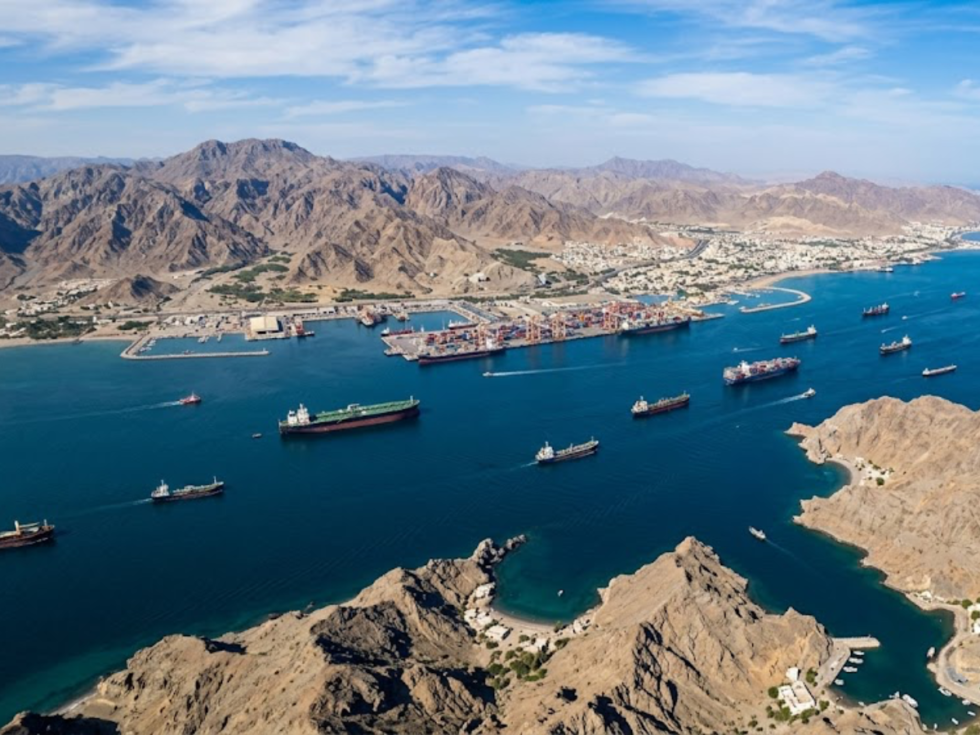
How two distant chokepoints — one between Iran and the Gulf, the other between Yemen and the Horn of Africa — form a single chain that can shake global energy prices, world trade, and the daily life of an ordinary person in the Horn of Africa
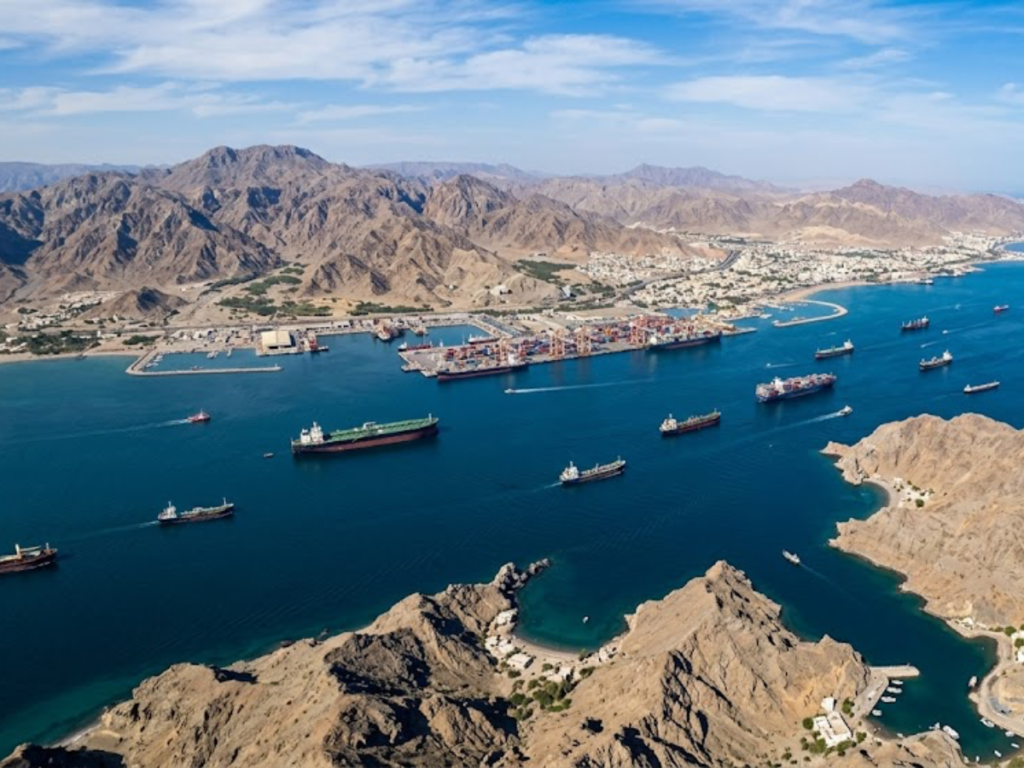
Every night, hundreds of heavily laden vessels carrying crude oil, liquefied natural gas (LNG), and a wide range of goods quietly pass through the Strait of Hormuz between Iran and Oman, before heading toward Bab el-Mandeb, the narrow gateway between Yemen and the Horn of Africa, on their way to the Suez Canal in Egypt. Two distant corners of the map — yet if either closes, the world’s economy shudders. Today, both are unsettled at once.
Since February 2026, a grinding conflict between the United States and Israel on one side and Iran on the other has led Iran to formally declare the Strait of Hormuz closed, causing severe disruption to shipping traffic. At the same time, Yemen’s Iran-backed Houthi movement has resumed attacks on commercial vessels in Bab el-Mandeb, accusing Saudi Arabia of imposing a new blockade. The central question today is: if these two gateways — connecting the Gulf, the Red Sea, and global markets — were disrupted at the same time, how far would the consequences spread?
The Two Gateways of Global Trade
The Strait of Hormuz is a 33-kilometer passage between Iran and Oman, and it is the sole maritime outlet for oil from the Gulf states — Saudi Arabia, the UAE, Kuwait, Qatar, Iraq, Bahrain, and Iran itself. Bab el-Mandeb, whose name means “Gate of Tears” in Arabic, is a strait between Yemen and the Horn of Africa (Djibouti and Eritrea), linking the Red Sea to the Gulf of Aden, and is the route hundreds of vessels use to reach the Suez Canal in Egypt.
According to the International Energy Agency (IEA), in 2025 an average of roughly 20 million barrels per day of crude oil and refined products transited the Strait of Hormuz — about 34% of the world’s seaborne crude oil trade. Roughly 20% of global LNG trade also passes through Hormuz, with 93% of Qatar’s LNG exports and 96% of the UAE’s transiting the strait. Bab el-Mandeb, by comparison, is far smaller: in the first half of 2025 the U.S. Energy Information Administration (EIA) recorded roughly 4.2 million barrels per day passing through it, down from 9.3 million in 2023 — a decline that reflects the disruption already caused by the situation in Yemen.
The Strait of Hormuz Crisis
Since February 28, 2026, when the United States and Israel struck Iranian military targets, Iran has formally declared the Strait of Hormuz closed. Shipping traffic through the strait has since fallen sharply. According to a senior Iranian official cited by CNBC, Iran is demanding that Washington lift its naval blockade of Iran, end sanctions, withdraw military forces from the region, pay war reparations, and release frozen Iranian assets before it will reopen the strait. Iran and Oman have reportedly moved close to an agreement on managing the waterway, but U.S. officials and shipping analysts remain skeptical about how such an arrangement would actually function.
It is important to separate verified facts from claims made by the parties and forecasts made by analysts. What is verified: the conflict is ongoing, shipping traffic has dropped sharply, and real attacks occurred near Oman in June and July 2026. What Iran claims: that it has full authority to manage the strait — a position that directly conflicts with international maritime law. What analysts project: that the situation may move toward a negotiated settlement, but that recurring flare-ups still pose a serious risk.
The Danger at Bab el-Mandeb
Just as the Hormuz situation remains tense, Yemen’s Houthis — who maintain close ties with Iran — have resumed attacks on shipping and on port areas such as Mokha, accusing Saudi Arabia of imposing a new blockade. These attacks threaten the fragile truce that has held in Yemen’s civil war since 2022. Should that truce collapse, it could open a second front of conflict near Bab el-Mandeb. Crucially, the Houthis’ direct alignment with Iran means the Hormuz conflict and the Bab el-Mandeb threat are not two unrelated events, but two fronts of a single, politically linked crisis.
What Happens If Both Are Disrupted Simultaneously?
If Hormuz and Bab el-Mandeb were both fully or partially closed at the same time, the first hours would likely see a sharp spike in oil prices and in the war-risk insurance premiums charged on vessels heading to the region. It is important to distinguish three levels of disruption: a complete closure (where vessels genuinely cannot pass), a partial disruption (where transit continues but at sharply reduced volume or under altered protocols), and an elevated security threat (where routes remain technically open but insurance and shipping costs rise substantially).
As history showed when Hormuz was first closed in 2026, Brent crude jumped from $71 a barrel to $100.69 in July. If both waterways closed simultaneously, oil and LNG cargoes bound for Asia would need to reroute around the Cape of Good Hope in southern Africa, adding roughly 10 to 14 days to voyages and pushing up fuel costs by 25–40%, alongside higher insurance premiums. In the opening weeks, countries holding strategic reserves — the United States, China, and the European Union — would draw on those stockpiles to offset the shortfall, but in the following weeks, disrupted shipping schedules and elevated global fuel prices would likely be felt more broadly across markets.
Consequences for China, India, Japan, South Korea, Europe, and the United States
According to the EIA, 84% of the crude oil transiting Hormuz is bound for Asian markets, with China, India, Japan, and South Korea the four largest recipients. China alone typically receives about a third of its oil supply through this route. The United States, by contrast, currently imports only about 0.5 million barrels a day of crude via the Gulf — just 2% of total U.S. petroleum consumption — reflecting the growth of domestic shale production. This means the U.S. is considerably less exposed to a Hormuz disruption than it once was, while Asia and Europe remain heavily dependent.
Europe, already strained by earlier Red Sea disruptions, would see shipping and fuel costs rise further. Egypt, whose Suez Canal revenue is directly tied to shipping volumes, has already reported losses running into the hundreds of millions of dollars per month, with Suez Canal revenue down sharply from its 2023 peak of $10.25 billion. Saudi Arabia and the UAE, which have pipelines capable of routing some oil around Hormuz, hold a degree of resilience that other Gulf states lack.
Consequences for the Horn of Africa
This is the area where international data is least complete, meaning any assessment here should be read as analysis and possibility rather than established fact. If Hormuz and Bab el-Mandeb both close or become high-risk, people across the Horn of Africa would likely feel it first through rising prices for imported fuel, agricultural fertilizer, and other imported goods — costs that translate directly into the daily economics of ordinary households.
At the same time, the ports of Berbera, Bosaso, Mogadishu, and Djibouti could gain added strategic importance, given their position along the Gulf of Aden, somewhat removed from the highest-risk zones near Yemen. According to a report from the Middle East Forum, DP World has invested in developing Berbera Port in Somaliland, which the World Bank’s port performance rankings now place second in Africa after Djibouti. Should instability around Yemen deepen, it is plausible that some shipping traffic could shift toward ports further from the danger zone — but this remains a possibility under analysis, not a confirmed shift or a decision shipping companies have actually made. Limitations such as water depth and infrastructure capacity at these ports have also not yet been fully assessed.
Who Benefits and Who Loses?
Russia, also a major oil and gas exporter, could benefit from higher global oil prices, since it is not directly dependent on Hormuz. China faces a more complicated position: it holds substantial strategic oil reserves, but remains dependent on both Hormuz and the Strait of Malacca for its oil supply. The United States, given its naval power, could gain diplomatic leverage if it manages to help stabilize the situation — but risks being drawn deeper into the conflict if tensions escalate further. Saudi Arabia and other Gulf states, intolerant of a prolonged blockade, would need to sustain intensive diplomatic efforts to restore stability.
Military Action or Diplomacy?
The United Nations, Oman, Qatar, and several other states have roles to play in de-escalation efforts. Oman is already mediating Iran-U.S. talks over Hormuz. Pakistan and Turkey, given their ties to both Iran and Gulf states, could serve as additional mediators, though neither has taken on a formal leading role so far. China, whose oil interests depend on Hormuz stability, has shown cautious diplomatic engagement rather than direct involvement in the conflict. An international naval coalition to protect shipping is plausible, but the precedent of the 2023–2025 Red Sea crisis showed that military measures alone did not fully stop attacks — making diplomacy an indispensable part of any lasting solution.
Conclusion
The central question today is whether Hormuz and Bab el-Mandeb could realistically remain closed for an extended period, or whether mounting economic costs and international pressure will push the parties toward a rapid settlement. Historical precedent — both the 2023–2025 Red Sea crisis and the 2026 Hormuz crisis — suggests these situations tend to follow a cycle: closure, economic pressure, diplomatic mediation, and partial reopening, rather than indefinite, permanent closure.
Hormuz and Bab el-Mandeb are two geographically distant waterways, one in the Persian Gulf, the other at the southern edge of the Arabian Peninsula. But when both come under threat at once, they become a single chain linking Middle Eastern conflicts, global energy prices, world trade, and the daily life of an ordinary person in the Horn of Africa — someone who may know nothing of the military decisions being made off Bandar Abbas or Mokha, but who will feel their consequences the next time they buy fuel or sugar.