The New Scramble for Africa in the Age of Critical Minerals, Great-Power Competition and Strategic Geography
For much of the post-Cold War era, Africa occupied a secondary place in global geopolitics. Today, that reality has changed dramatically. From Washington to Beijing, Moscow to Ankara, Abu Dhabi to Riyadh, major powers are investing unprecedented diplomatic, military and economic resources across the continent.
This renewed interest is not driven by charity or development alone. It is rooted in a growing recognition that Africa will play a decisive role in shaping the global economy, energy transition, technological competition and strategic balance of the 21st century.
The question is no longer whether Africa matters. The question is who will shape Africa’s future, and whether Africans themselves can turn this competition into an advantage.
Why Africa Matters More Than Ever
Three forces are driving Africa’s geopolitical rise.
First is demography. Africa is home to the world’s youngest population and is expected to account for a significant share of global population growth by mid-century. By 2050, the continent’s population is projected to approach 2.5 billion people, creating the world’s largest future labor force and one of its largest consumer markets.
Second is resources. Africa possesses some of the world’s largest reserves of critical minerals essential for electric vehicles, batteries, renewable energy systems, semiconductors and artificial intelligence infrastructure. The continent holds roughly 30% of global critical mineral reserves and dominates supplies of key materials such as cobalt, manganese and platinum-group metals.
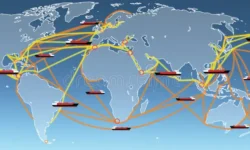
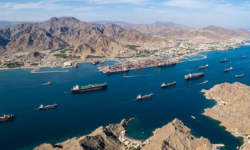
Third is geography. Africa sits astride some of the world’s most important maritime routes. The Red Sea, Bab al-Mandeb, Suez Canal, Gulf of Guinea and Cape routes connect Europe, Asia and the Middle East. In an era of supply-chain competition and maritime insecurity, geography has become a strategic asset.
Together, these factors have transformed Africa from a peripheral arena into a central theater of global competition.
The Major Powers and Their Strategies
China: Infrastructure, Minerals and Long-Term Influence
China remains the most influential external economic actor in Africa. Through the Belt and Road Initiative (BRI), Beijing has financed railways, ports, roads, industrial zones and energy projects across the continent. Chinese companies are deeply embedded in mining sectors from Zambia and the Democratic Republic of Congo to Guinea and Zimbabwe.
China’s strategy is straightforward: secure access to resources, expand export markets, and build long-term political relationships.
Its dominance is particularly visible in critical minerals, where Chinese firms control significant portions of mining, processing and refining supply chains. In many sectors, China is not simply extracting minerals—it is positioning itself to control the industries built on them.
United States: Security, Supply Chains and Strategic Competition
Washington increasingly views Africa through the lens of strategic competition with China. Recent American initiatives focus on securing alternative critical-mineral supply chains, reducing dependence on Chinese processing capacity and strengthening economic partnerships. Projects such as the Lobito Corridor linking Angola, Zambia and the Democratic Republic of Congo reflect efforts to diversify access to copper and cobalt.
The United States also remains deeply involved in counterterrorism cooperation, maritime security and military partnerships, particularly in the Horn of Africa and the Sahel.
Russia: Security and Political Influence
Russia’s influence is smaller economically but significant politically and militarily. Following declining Western influence in parts of the Sahel, Moscow has expanded security cooperation with several African governments. Russian engagement often centers on military training, arms sales and security partnerships rather than large-scale infrastructure investment.
Russia presents itself as a partner unconcerned with governance conditions, making it attractive to some governments facing internal security threats.
Turkey: The Quiet Expansion
Turkey has steadily expanded its African footprint over the past two decades. Its influence combines trade, humanitarian engagement, aviation links, military cooperation and diplomatic outreach. Turkey has built strong relationships in the Horn of Africa, particularly through defense agreements, infrastructure projects and educational institutions. Unlike larger powers, Ankara often emphasizes flexible partnerships and commercial opportunities.
UAE and Saudi Arabia: The Red Sea Powers
The Gulf states increasingly view Africa as part of their strategic neighborhood. The UAE has become one of the most active investors in ports, logistics infrastructure and maritime facilities, particularly along the Red Sea and the Horn of Africa. Control of trade corridors and shipping routes is central to Abu Dhabi’s strategy.
Saudi Arabia’s interests focus on food security, agriculture, investment and Red Sea security. As climate pressures grow and food supplies become more strategic, access to African agricultural land and trade routes is becoming increasingly important.
Is This a New Scramble for Africa?
Comparisons with the colonial-era Scramble for Africa are tempting but imperfect. Unlike the 19th century, today’s competition does not involve formal colonization or territorial conquest. African governments possess sovereignty and often negotiate among multiple competing partners.
However, there are striking similarities.
External powers are again competing for resources, strategic locations, political influence and economic access. Infrastructure investments, military bases, port concessions and mining agreements have become modern instruments of geopolitical competition.
The key difference is that African states now possess far greater agency. Many governments actively leverage competition among external powers to maximize benefits and reduce dependence on any single partner.
The Key Battlegrounds
The Horn of Africa
Few regions better illustrate modern competition. Located near Bab al-Mandeb and the Red Sea, the Horn sits at the intersection of Africa, the Middle East and global maritime trade. Military facilities, port investments and diplomatic competition have intensified across the region.
The Red Sea
The Red Sea has become one of the world’s most contested waterways. Disruptions affect global shipping, energy markets and supply chains. Control of ports and maritime infrastructure is increasingly valuable.
The Sahel
The Sahel has emerged as a security battleground where terrorism, political instability and foreign influence intersect. Declining Western influence has opened opportunities for new actors.
Central Africa
Central Africa contains some of the world’s most important critical mineral reserves, particularly cobalt and copper. This region increasingly sits at the heart of technological competition.
Critical Minerals and the Future Economy
Africa’s importance is being amplified by the global energy transition. Lithium, cobalt, copper, rare earth elements and other strategic minerals are indispensable for electric vehicles, battery storage, renewable energy systems and advanced technologies. Global demand for several of these minerals is expected to increase dramatically over coming decades.
The AI revolution further strengthens Africa’s importance because advanced computing infrastructure depends on mineral-intensive supply chains.
In many ways, Africa’s mineral wealth is becoming as strategically important today as oil was during the 20th century.
Winners, Risks and Opportunities
Countries rich in strategic minerals—including the Democratic Republic of Congo, Zambia, Namibia and Zimbabwe—stand to benefit substantially from growing demand. However, risks remain significant.
Without strong governance, resource wealth can reinforce corruption, debt dependency and political instability. Competition among external powers may also intensify internal rivalries and create new forms of dependency.
The greatest beneficiaries are likely to be countries capable of moving beyond raw-material exports toward processing, manufacturing and value addition.
Future Scenarios
Scenario 1: Economic Transformation
Probability: Moderate to High
Investment, industrialization and regional integration drive growth. Critical minerals become the foundation of new manufacturing sectors.
Opportunity: Broad economic development.
Risk: Governance failures undermine gains.
Scenario 2: Intensifying Rivalry
Probability: High
Great-power competition increasingly shapes political and security dynamics.
Opportunity: Greater bargaining leverage for African states.
Risk: Proxy conflicts and instability.
Scenario 3: Africa as a Strategic Center
Probability: Moderate
Africa emerges as one of the defining geopolitical centers of the century, influencing energy, technology, trade and global governance.
Opportunity: Historic increase in global influence.
Risk: Competition overwhelms institutional capacity.
Conclusion
Africa is no longer merely a region being observed by the world. It is becoming one of the arenas where the future world order is being negotiated.
Population growth, critical minerals, strategic geography and expanding markets have elevated Africa from the margins of geopolitics to its center. The competition among China, the United States, Russia, Turkey, the UAE and Saudi Arabia reflects a broader reality: whoever builds enduring partnerships in Africa will gain significant advantages in the global economy of the future.
The decisive question is not which external power wins Africa. It is whether African states can use this moment to strengthen their own sovereignty, industrial capacity and bargaining power.
If they can, Africa may emerge not as the object of a new scramble, but as one of the principal architects of the 21st-century international system.